
Ukončené granty:
-
Studium funkce membránových proteinů
Grantová agentura: GAUK
Identifikační číslo grantu: GAUK 456213
Hlavní řešitel: Mgr. Jakub Zahumenský, Ph.D.
Spoluřešitelé: doc. RNDr. Dana Gášková, CSc.
Annotace grantuHlavní náplní projektu je podrobné a systematické studium membránových transportérů u kvasinek Saccharomyces cerevisiae, jejich funkce a reakce na chemický stres v různých podmínkách. Předmětem studia budou především proteiny mnohočetné lékové rezistence (MDR) Pdr10 a Pdr15 a plazmatická H+-ATPáza (Pma1). Zejména budou zkoumány možnosti a způsoby její aktivace a inhibice.
Pozornost bude také věnována studiu transportérů, které nejsou nativní kvasince S. cerevisiae, ale mohou být v této kvasince (heterologně) exprimovány, zejména Cdr1 a Cdr2 – MDR proteiny nativní kvasince Candida albicans (rezistence kvasinkových infekcí a kontaminací) [1, 2].
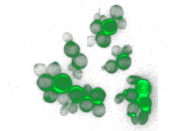
Chemický stres bude představován látkami používanými v medicíně nebo zemědělství – např. antibiotiky, cytostatiky apod.. Proteiny budou studovány v intaktních kvasinkových buňkách především metodou barvících křivek [3] za využití redistribuční potenciometrické fluorescenční sondy diS-C3(3), která je zároveň substrátem dvou významných kvasinkových MDR pump (Pdr5, Snq2) [4].
Kvasinkové MDR proteiny jsou odpovědné za vysokou rezistenci infekcí a kontaminací. Zároveň jsou vysoce homologní s lidskými MDR proteiny, které například zvyšují rezistenci rakovinných buněk vůči chemoterapii. Základní strukturní a funkční organizace kvasinkových buněk je shodná s buňkami vyšších eukaryot [5]. Z těchto důvodů mohou mít výsledky projektu praktický význam i v oblasti medicíny.
Reference:
-
Studium mnohočetné lékové rezistence u kvasinek Kluyveromyces lactis
Grantová agentura: GAUK
Identifikační číslo grantu: GAUK 1072313
Hlavní řešitel: Mgr. Iva Jančíková, Ph.D.
Spoluřešitelé: doc. RNDr. Dana Gášková, CSc.
Annotace grantuPři léčbě některých typů onemocnění (např. rakovinných) byla zaznamenána snížená účinnost léčivých látek jako důsledek vyvinuté rezistence buněk. To je mj. způsobeno tím, že v buněčných membránách se vyskytují transportéry, které aktivně odstraňují široké spektrum léčivých látek ven z buněk. Jejich nadprodukce vede ke vzniku tzv. mnohočetné lékové rezistence (MultiDrug Resistance, MDR). Tyto proteiny (pumpy) se vyskytují u všech typů buněk. Mezi nejlépe prostudované MDR pumpy eukaryotních organismů patří Pdr5p u kvasinky Saccharomyces cerevisiae a P-glykoprotein u lidských buněk.
V rámci tohoto projektu se chceme zaměřit na studium homologního transportéru Pdr5p u kvasinek rodu Kluyveromyces, konkrétně Kluyveromyces lactis (využívaný též v potravinářském průmyslu při výrobě sýrů), který je však podstatně méně prozkoumán než S. cerevisiae. Pro charakterizaci této pumpy (ozn. Kl Pdr5p) použijeme fluorescenční metodu, která byla vyvinuta pro studium aktivity dvou hlavních MDR pump u S. cerevisiae, Pdr5p a Snq2p. Metoda je založena na sledování rozdílu v akumulaci potenciometrické fluorescenční sondy diS-C3(3) v buňkách s různou aktivitou pump, které sondu z buněk odstraňují (sonda je jejich substrátem).
Úspěšné zavedení fluorescenční metody pro studium pumpy Kl Pdr5p nám umožní sledovat faktory ovlivňující její aktivitu, včetně vyhledávání účinných inhibitorů, a porovnat aktivitu Pdr5p u obou druhů kvasinek (Saccharomyces vs. Kluyveromyces).
-
Biofyzikální studie membránového transportního proteinu MntH (Proton-dependent Manganese Transporter) bakterie E. coli z rodiny SLC11 (SoLute Carrier 11) a jeho vybraných transmembránových segmentů
Grantová agentura: GAUK
Identifikační číslo grantu: GAUK 701512
Hlavní řešitel: Mgr. Iva Jančíková, Ph.D.
Spoluřešitelé: RNDr. Roman Chaloupka, Ph.D.
Annotace grantuRodina SLC11 (nebo Nramp) zahrnuje membránové proteiny, sekundárně aktivní transportéry, které zprostředkovávají přenos dvojmocných kovových iontů spolu s protony do buňky. Proteiny z této rodiny jsou také spojovány s imunitní odpovědí některých organismů při infekci intracelulárními parazity. Přesný mechanismus transportu těmito proteiny nebyl dosud zcela objasněn. Protein MntH vzhledem ke své strukturní a funkční homologii s eukaryotními proteiny představuje vhodný model pro studium funkce celé rodiny SLC11. Navíc bylo zjištěno, že peptidy odpovídající svojí sekvencí některým transmembránovým segmentům (TMS) proteinu MntH jsou schopny v modelové membráně asociovat a vytvořit iontový kanál. Fluorescenční spektroskopie poskytuje vhodný nástroj jak ke studiu transportu celého proteinu MntH in vivo, tak ke sledování chování syntetických peptidů v modelových membránách. Využitím metody kombinace fluorescenční a hmotnostní spektroskopie je možné stanovit stechiometrii transportu dvojmocných kovových iontů a protonů prokaryotním proteinem MntH. Pomocí fluorescence můžeme sledovat vliv vnějších podmínek na stechiometrii transportu a studovat interakce proteinu MntH s dalšími ionty (např. Ca2+). V kontextu těchto výsledků může množství informací poskytnout studium chování syntetických peptidů (odpovídajících TMS3 a TMS6) v modelových membránách liposomů, specifity jimi tvořených kanálů i jejich interakce s dalšími ionty. K tomuto účelu budou vyvinuty a optimalizovány postupy měření s využitím fluorescenčních sond s vhodnými vlastnostmi.